College football recruiting is a wild ride. A teenager’s decision can change a team’s future in an instant. For Florida State, the 2026 cycle showed the drama of this process.
The wins were like movie heists. Quarterback Jaden O’Neal switched from Oklahoma to Florida State, shocking everyone. Then, Amari Thomas went through a commitment saga that was as complex as a TV series. We also got receiver Devin Carter back from Auburn, in a diplomatic move.
But, there were also big losses. Losing Jay Timmons to Ohio State was a big miss. And losing top DB target CJ Bronaugh to Florida was a major disappointment.
This drama is part of a bigger plan. The Seminoles’ class is getting stronger thanks to these moves. For more on how these changes are shaping the team, check out the latest on Florida State’s 2026 safety acquisition. So, what’s the real impact of all this drama? Let’s dive into the Seminoles’ future.
What Sways a Prospect?
Forget the ceremonial hat pick; the real drama unfolds in private. Logic, emotion, and opportunity collide here. Decoding a recruit’s flip is like reverse-engineering a teenager’s brain during a high-stakes shopping spree. The currency isn’t just cash—it’s fit, future, and feeling.
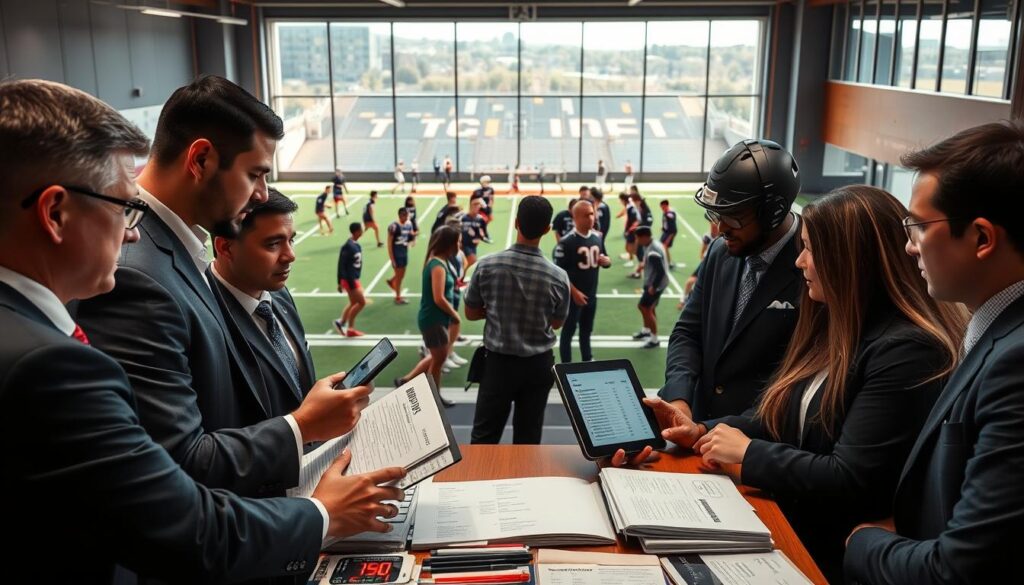
The Rational Divorce: Sometimes, it’s just math. Take quarterback Brady Smigiel. His decommitment wasn’t about drama; it was a clean, rational break. He looked at Gus Malzahn’s offensive blueprint—built for mobile quarterbacks—and realized he was a square peg. No hard feelings, just a glaring scheme fit issue. It’s a reminder that for all the emotion, a player’s actual skills in a system are a non-negotiable first date.
The Bag Chase: Then we have the open secret. The “bag.” It’s the not-so-subtle euphemism for Name, Image, and Likeness (NIL) deals that have turned the process into a silent auction. When a target like Sam Roseborough bolts for Texas A&M, you can bet the financial persuasion was more than a gentle nudge. Let’s be real: pretending money doesn’t talk in these recruiting wars is like pretending a hurricane is a gentle breeze.
The Opportunity Knocks: Beyond cash and scheme, there’s pure, unadulterated opportunity. A recruit scans a depth chart. He sees three seniors starting ahead of him at his dream school. Then he looks at another program where the path to starting as a freshman is a straight line. That vision of immediate playing time is a siren song no amount of tradition can easily drown out.
The Relational Heist: This is where the master persuaders operate. While some programs rely on stability, others weaponize relentless, in-season courtship. Look at Miami’s Mario Cristobal flipping DeAnthony Lafayette from LSU last November. That’s a surgical strike executed while other teams, including a stable FSU, were arguably just managing their board. It highlights a stark contrast: proactive poaching versus reactive stability. Speaking of staff strategy, understanding how a program positions itself internally is key, as seen in the analysis of FSU’s own staff realignment.
So, what sways a prospect? It’s never one thing. It’s a cocktail—a shot of logic, a mixer of opportunity, and a strong financial chaser, all served by the coach who connects best. The schools that win these battles are the ones that don’t just sell a dream. They sell a detailed, personalized blueprint for it.
Epic Last-Minute Stories
The story of a recruiting class is not set in the summer. It’s rewritten in the frantic moments before Signing Day. Hope changes by the minute. Verbal commitments feel as solid as a handshake in a hurricane.
If recruiting is a drama, the “last-minute story” is the season finale. It’s where commitments are made, broken, and sometimes brought back. Jay Timmons’ story is the most epic.
A 5-star legacy, Jay Timmons’ switch to Ohio State was a big loss. It was a hard hit for FSU. It’s a twist you see coming but hope the writers are smarter than that.
On the other hand, Nikau Hepi’s late addition was shocking. A 6’7″, 370-pound lineman from New Zealand, he chose FSU over Auburn. That’s like finding a hidden gem in the draft room.
There were also near-misses that left fans in despair. The failed attempt to flip Heze Kent from Florida was a Hail Mary. Then, CJ Bronaugh chose the Gators after a long courtship. These stories are the emotional heart of the cycle.
| Prospect | Original Commitment | Final Destination | Outcome | Impact Note |
|---|---|---|---|---|
| Jay Timmons | Florida State (Legacy) | Ohio State | Major Loss | 5-star legacy flip; defining narrative gut-punch. |
| Nikau Hepi | Auburn | Florida State | Surprise Win | Massive OL from NZ; a late-cycle hidden gem. |
| Heze Kent | Florida | Florida | Failed Flip | Intense, last-ditch effort that fell short. |
| CJ Bronaugh | Uncommitted | Florida | Lost Battle | Full-court press ended with rival victory. |
These moments show the highs and lows of fan experience. They remind us that in recruiting, as in high-stakes real estate, outcomes are unpredictable until the last second. Handling this volatility takes special nerve.
How Staff Handles Surprises
How does a coaching staff handle surprises in the fast-changing world of sports? When plans can change with one tweet, they must stay calm and plan ahead.
Keeping Jaden O’Neal was a big win for FSU. They didn’t give up, even when others did. But losing a key player is tough. Is it the coaches’ fault, or the game plan? Changing coaches but keeping the same strategy is like painting a house without changing the design.
Do they panic or find a new way? Clear communication is key. Just as official updates set fan expectations, a team’s crisis plan must control the story. Bringing back a player who left before, like Amari Thomas, feels like fighting a battle that’s already lost.
In the intense world of recruiting, how a staff handles surprises can make or break their season. Relying on the same old plans won’t work. It’s time for a new strategy, not a repeat of the same story.