For decades, the Florida State Seminoles have built a legendary identity. They are known for a punishing, aggressive style of play. This reputation forms the “Garnet Wall,” a symbol of one of college football’s most feared units.
The program’s history is defined by eras of incredible top defenses. From the early foundational years to the national championship teams of the 1990s, a constant theme emerged. Relentless pressure and quarterback sacks became a trademark.
This intensity was forged in epic battles, like those against Miami. Those high-stakes games demanded physicality and smart coaching. They shaped a legacy where defensive performance decided championships.
Through the 2000s and into modern football, the Seminoles adapted their schemes. Yet the core principles of a ferocious pass rush and strategic innovation remained. Today, the pursuit of creating new top defenses and recording game-changing sacks continues to drive the program.
Coordinator Philosophies (4–3/Multiple)
Every legendary Florida State defensive unit had a coordinator with a bold football philosophy. These strategists turned raw talent into a force that could dominate games. The 4-3 base scheme became the Garnet Wall’s identity.
Mickey Andrews was the archetype. His philosophy was simple yet violent, built on the 4-3 alignment. He believed in speed over size, disrupting plays before they started. This created a line that could shoot gaps and linebackers who moved like predators.
Andrews’ system was a masterpiece of aggression, designed to suffocate offenses and punish mistakes. This led to a flood of turnovers. His playbook made takeaways a primary goal, not just luck. Drills focused on stripping the ball and defensive backs learned to read quarterbacks.
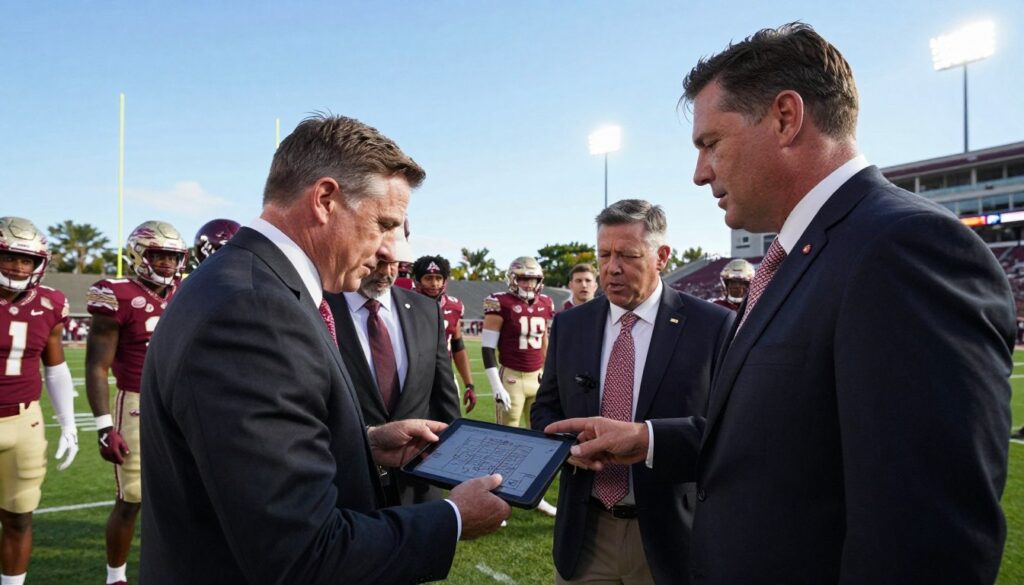
As football changed, so did FSU’s defensive philosophies. Later coordinators like Charles Kelly introduced multiple fronts and hybrid elements. The 4-3 evolved into more flexible looks, confusing modern offenses.
These philosophies were tested in rivalry games. A coordinator’s plan faced intense pressure. Halftime adjustments and disguising coverages could lead to critical turnovers. This environment proved the worth of aggressive and adaptable schemes.
| Philosophical Pillar | Andrews’ 4-3 Philosophy | Modern Multiple Philosophy |
|---|---|---|
| Primary Alignment | Base 4-3 (Defensive End, Tackle, Tackle, End; Strongside, Middle, Weakside Linebacker) | Multiple (4-2-5 Nickel, 3-3-5 Stack, 4-3 Hybrid) |
| Turnover Method | Front-four pressure forcing bad throws; aggressive man coverage for interceptions | Disguised blitzes and coverage shells creating confusion and strip-sacks |
| Key Trait | Predictable, ferocious execution | Unpredictable, adaptive game planning |
| Player Prototype | Extreme speed at linebacker and defensive back | Versatile “tweener” athletes who can rush or cover |
The legacy of these coordinator philosophies is a blueprint for success. A system must have a core identity, like Andrews’ 4-3, but also be flexible. The constant pursuit of turnovers is key. Understanding this evolution is vital when analyzing modern staff realignments, as today’s coaches seek the same magic.
Units that Terrified QBs (stats + film notes)
Statistics only tell part of the story. To really understand the fear Florida State’s defenses inspired, you need to watch the film. The best FSU units played with a fierce intensity, like Jack Lambert. They didn’t just stop plays; they hunted down offenses, breaking their will.
The 1993 national championship defense is one of the program’s top defenses. They led the nation in scoring defense, allowing just 9.4 points per game. The film shows a unit always on the attack. Defensive ends like Derrick Alexander and linebackers like Derrick Brooks attacked with disciplined fury.
On key third downs, the line refused to be blocked. They pressured quarterbacks without always getting sacks. This forced quick throws and mistakes, leading to many turnovers and defensive scores.
Twenty years later, the 2013 title team also terrorized quarterbacks. They ranked first in scoring defense and third in total defense. Their pass rush was explosive, getting 42 sacks.
Film study of the 2013 season shows a defense that thrived on chaos. Defensive backs like Lamarcus Joyner and Jalen Ramsey attacked the ball in the air. This led to 26 interceptions, a big part of their +17 turnover margin. They made big plays in big moments.
Let’s compare these two iconic units:
| Season | Scoring Defense Rank | Total Sacks | Key Takeaways | Film Signature |
|---|---|---|---|---|
| 1993 | 1st (9.4 PPG) | 35 | 35 Turnovers | Relentless, swarming pursuit from all levels. |
| 2013 | 1st (12.1 PPG) | 42 | 35 Turnovers (26 INT) | Explosive edge pressure forcing errant throws. |
| 1999 | 2nd (11.5 PPG) | 45 | 33 Turnovers | Dominant defensive line controlling the line of scrimmage. |
What made these groups special was turning pressure into points. A 1993 Florida game film note shows a cornerback jumping a screen route and scoring. This shows the mindset: every defender saw himself as a scorer.
The 2013 unit made a big play against Clemson. A blitz led to a strip-sack, ending a scoring threat. These plays were momentum-swinging and more than just stops.
The 1999 squad was another top defense. They didn’t get as many sacks, but their technique suffocated offenses. They rarely missed tackles, leading to long downs and turnovers.
In the end, the numbers are just evidence. The real terror is in the film: unblocked linebackers, defensive backs staring down quarterbacks, and celebrations after takeaways. That’s the Garnet Wall at its most fierce.
Signature Games and Goal‑Line Stands
History remembers the stops that saved seasons, the turnovers that turned tides, and the stands that became legend. For Florida State’s top defenses, legacy was not built in September. It was forged in November and January, with the score tight and the goal line inches away.
The rivalry with Miami provides the perfect canvas. One iconic clash saw the Seminoles’ defense, backed up on their own 1-yard line, face four consecutive plays from the Hurricanes. On fourth down, a blitzing linebacker shot the gap, meeting the running back in the air. The collision caused a fumble recovered by FSU. That single stop, a masterpiece of will and scheme, sealed a victory and defined an era. It was a textbook example of how critical turnovers are born from relentless pressure.
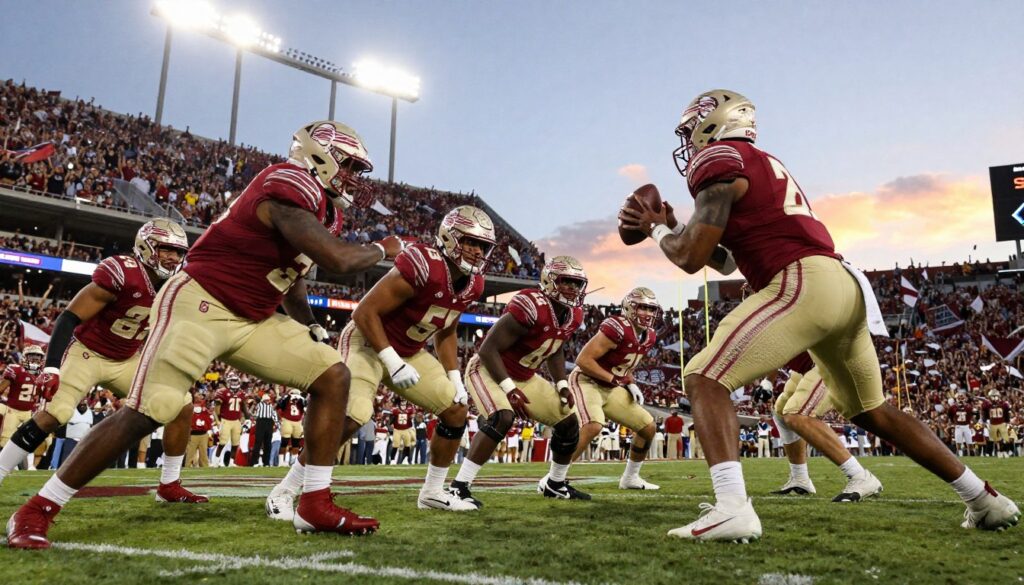
These moments repeated against every major rival. Versus Florida, a fourth-down pass breakup in the end zone preserved a lead as time expired. Against Clemson, a red-zone interception on a trick play halted a potentially game-winning drive. Each play shared a common thread: flawless execution under maximum duress. The unit’s ranking among the nation’s top defenses was often decided in these clutch situations.
The statistics tell a compelling story. In their most celebrated wins, the Seminoles frequently posted a positive turnover differential. Winning the takeaway battle in a 3-point game is more valuable than in a 30-point blowout. These were not accidents. They were the result of a culture that practiced strip drills and ball-hawking techniques every day, for these moments.
Anatomy of a Goal-Line Stand
What does it take to make a stand? First, personnel. Coordinators would often swap to a “jumbo” or “goal-line” package. This meant bringing in extra defensive linemen and linebackers to fortify the front. Speed was sacrificed for pure, immovable strength.
Second, play-calling. Blitzes became more calculated. The defense would often show one look and shift at the last second, confusing the offensive line’s blocking assignments. The focus was simple: fill every gap. Let nothing through. The strategy forced offenses into predictable plays, increasing the chance of a critical error or a turnover.
Lastly, mentality. It was a test of will. The defense believed, down to the last man, that they were stronger. This psychological edge transformed good units into historic top defenses.
| Opponent | Year | Key Play / Stop | Game Impact |
|---|---|---|---|
| Miami | 1993 | Fourth-down stuff & forced fumble at the 1-yard line | Sealed a 28-10 win, preserved national title hopes |
| Florida | 1996 | End zone pass breakup on 4th & Goal | Secured a 24-21 rivalry victory |
| Clemson | 2013 | Red-zone interception on a double-pass attempt | Halted comeback, key to 51-14 ACC Championship win |
| Notre Dame | 2014 | Goal-line stand forcing a field goal attempt | Maintained momentum in a 31-27 road win |
These signature victories did more than just add to the win column. They cemented a reputation. Opposing offenses knew that even if they drove the length of the field, the hardest yards were the last ones. This aura of inevitability is the ultimate hallmark of legendary top defenses. By creating game-changing turnovers in the most pressurized spots, the Garnet Wall wrote its own history, one unforgettable stand at a time.
Lessons for Today’s Scheme
The past offers a clear guide for today’s defensive success. Florida State’s history shows that great coordinators focus on their team’s strengths. Today, coaches can mix aggressive 4-3 schemes with various fronts to confuse opponents.
Generating sacks without reckless blitzing is key. Historic Seminole fronts used four rushers to create pressure. Modern teams, like the Houston Texans’ defense, use technique and speed to collapse the pocket. This shows that sacks come from discipline, not just play-calling.
Versatile players are essential. The spread offense needs defenders who can run and hit. Florida State’s legacy teaches that fundamental toughness wins. Coaches must develop players who excel in both coverage and the pass rush.
The final lesson is balance. The best defenses control early downs and attack on third and long. This approach, seen in both past and present schemes, forces mistakes. It turns a strong defense into a legendary one.