The fax machines have gone silent. The ceremonial hats are off. For college football, the 2026 early signing period is officially in the books.
Now comes the real fun. The parlor game shifts from “where will he sign?” to a far more brutal question: “who gets to play?”
This isn’t a simple freshman invasion. It’s a complex siege, fueled by what The Athletic reports as a record 2,300+ scholarship players in the transfer portal. That’s a flash flood of talent eroding depth charts from coast to coast.
Think of it as the sport’s new free agency, a concept even EA Sports’ Dynasty Mode has codified as essential for building a program. Roster retention is out. Relentless churn is in.
So, as spring practice looms, which spots on the field are already primed for an all-out war? Let’s survey the pre-spring tumult.
Coach Comments
Every word from a coach is a strategic move in a game of roster chess. They’re not just talking about talent for the media. They’re managing egos, signaling to the transfer portal, and changing the depth chart in real time. To understand the coming battles, you must learn to decipher the dialect.
When a coach says, “He needs to gain 20-25 pounds,” it’s not just about weight. It’s a sign that the player isn’t ready yet. It’s like saying, “Not ready for primetime. This job is available.” A report saying a new recruit might be better than current players is a clear message. It’s like saying, “We’re looking for someone better.”
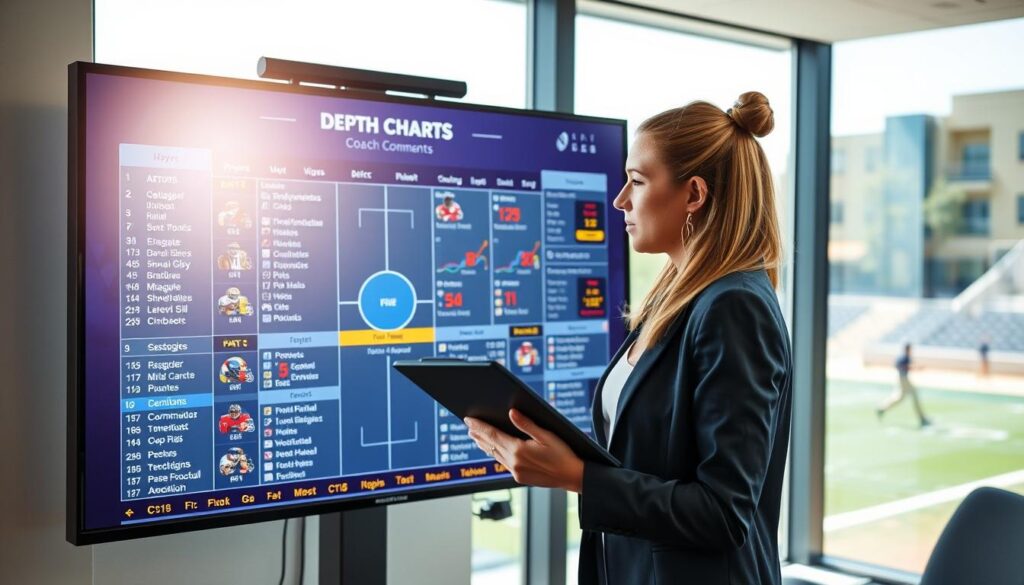
The phrase “We need to hit the portal hard” is a big deal. It shows desperation and a need for a player right now. With only 22 Power 5 graduate transfer offensive linemen available last cycle, it’s clear why coaches are so desperate.
When a coach says this, it’s like they’re searching for the last bottle of water after a hurricane. It changes the depth chart dynamics, making everyone’s job security uncertain.
So, how do you understand these phrases? Think of it as your Coachspeak-to-Roster-Reality dictionary.
| Coachspeak Phrase | Real-World Roster Implication | Portal Signal |
|---|---|---|
| “Loses two starters on the offensive line.” | The position group is in crisis mode. Jobs are wide open for anyone, including true freshmen. | High. Expect the program to be active buyers. |
| “Has a window of opportunity due to departing seniors.” | A younger player is being publicly anointed as the heir apparent. The depth chart is being pre-set. | Low for that position. Signals internal confidence. |
| “Could quickly battle for a role.” | The newcomer is already ahead of several veterans. The battle is a formality. | Negative for players at that spot. Start packing. |
| “We’re looking for more consistency.” | The current starter is on a very short leash. A single bad practice could cost him his job. | Moderate. The team is open to an upgrade if one appears. |
Interviews like the one with the Nebraska tight ends coach discussing position are must-watch for fans. You’re not listening for who’s “working hard.” You’re listening for the subtle shade, the specific name that gets praised without prompting, or the position group that gets mentioned with a sigh. That’s where the real depth chart is published—not on a piece of paper, but in the space between a coach’s carefully chosen words.
In the end, the podium is a strategic tool. A comment about weight is a nudge. A mention of the portal is a sledgehammer. And the smart fan learns to listen for the sound of the board being shaken.
Practice Standouts
In the world of spring ball, standout performances are more than just noticed. They can change the game for everyone. When helmets click, jobs can disappear. This is where position competition shows its true colors.
ESPN’s list of high-impact recruits is like a call for action. These recruits are not just any players. They are immediate threats to the status quo.
| Player | School | Position | Competitive Edge | Path to Playing Time |
|---|---|---|---|---|
| Jackson Cantwell | Miami | Offensive Line | Mauler strength, elite size | Challenge aging veterans on a rebuilding front |
| Keisean Henderson | Houston | Quarterback | Dynamic playmaking, dual-threat speed | Open battle in a new offensive system |
| TJ Guyton | Texas Tech | Edge Rusher | Explosive first step, active hands | Replace departed production on defense |
| G5 Transfer (Typical) | Various P5 | Multiple | Proven production, college-ready physique | Immediate plug-and-play for specific scheme needs |
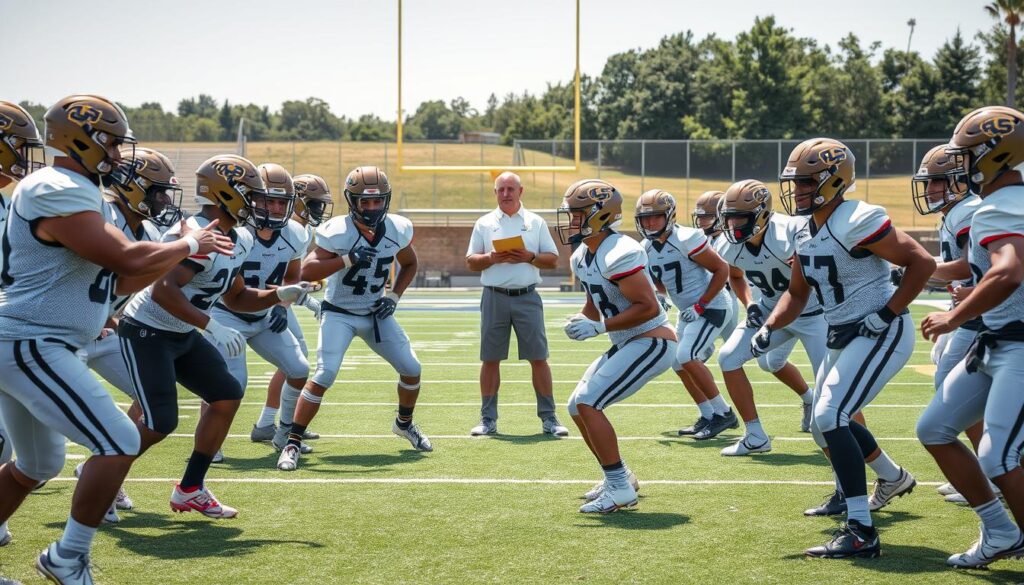
The last row in the table is key. The Athletic reports 238 players moved from Group of 5 to Power 5 schools this cycle. This is a huge increase from last year.
These transfers are game-changers. They’ve already shown their skills on smaller stages. They come ready to win jobs, not just compete.
Imagine a former Sun Belt linebacker leading his conference in tackles. He doesn’t care about your high school rating. He sees a chance to prove himself and takes it.
In EA Sports College Football, players compete for virtual glory. The drive for recognition is the same. Every rep is an audition.
The real standouts this spring will be the most adaptable. It’s not just about being the most athletic. It’s about learning fast, communicating well, and proving yourself.
Coaches say every job is open. On the practice field, we see who’s telling the truth. The evidence is clear. When a newcomer wins one-on-ones, the old order changes.
So, watch the drills, not the press conferences. The real story is being written in the spring heat. The standouts today will be the starters tomorrow. That’s how position competition reshapes a roster.
What Fans Should Watch in Spring and Fall
The spring depth chart is a “beautiful lie” for the armchair GM. It’s like a New Year’s resolution, full of promise but short-lived. This lineup changes with every new player and surprise.
The real excitement is in the details. Watch how new coaches handle Alabama’s quarterback situation. See if Jim Harbaugh’s replacement can make Bryce Underwood shine. These spring mysteries, as discussed in college football’s biggest spring questions, shape the headlines in September.
Smart fans treat updates like secret intel. One announcement, like Florida State’s changes, can flip the depth chart and shift odds. It’s not just being a fan; it’s analyzing the roster like a detective.
So, pick your perspective. Are you following Deion Sanders’ Colorado, a mix of transfer stars? Or Dabo Swinney’s Clemson, a symbol of careful player growth? The spring battles reveal your football values. In this world, you’re not just watching; you’re scouting.