Forget about treasure maps with X marking the spot. In modern college football, the real treasure is plotted on a different kind of chart. This chart tracks the movement of bodies across state lines. It’s not about cute stars on a map of Florida. It’s a live intelligence briefing.
Let’s look at the data. Florida State’s incoming class is like a strategic response to impending doom. Transfers like Tommy Castellanos (Boston College) and offensive linemen Luke Petitbon, Micah Pettus, Gunnar Hansen, and Adrian Medley aren’t just new names. They’re reinforcements for a tough schedule that includes Clemson, Alabama, Florida, and Miami. That’s a horror movie for any offensive coordinator.
Each recruit with a Florida footprint is a calculated asset. They represent a geographic pipeline from high school fields to Doak Campbell Stadium. Is this homegrown approach the answer? Or is the checkbook mightier than the map?
We’re analyzing whether a regional strategy for in-state players can withstand a national gauntlet. It’s the core question of modern local recruitment. Do you build a wall around your backyard, or do you go shopping anywhere you can?
Relationship with HS Coaches
When a new coach like Herb Hand joins, he first calls his high school coach. Forget the booster barbeques and generic handshakes. This is a detailed, ongoing diplomatic effort. It’s like a chess game and a joint venture.
Herb Hand taking over the offensive line room sends waves through high schools from Pensacola to Key West. When Mike Norvell takes over play-calling, it’s not just a change. It’s a sign to every prep coach that our partnership is being re-evaluated.
This isn’t just about getting top talent. It’s about building trust as a developmental partner. This trust is key for consistent local recruitment. It makes a program a trusted next step for players.
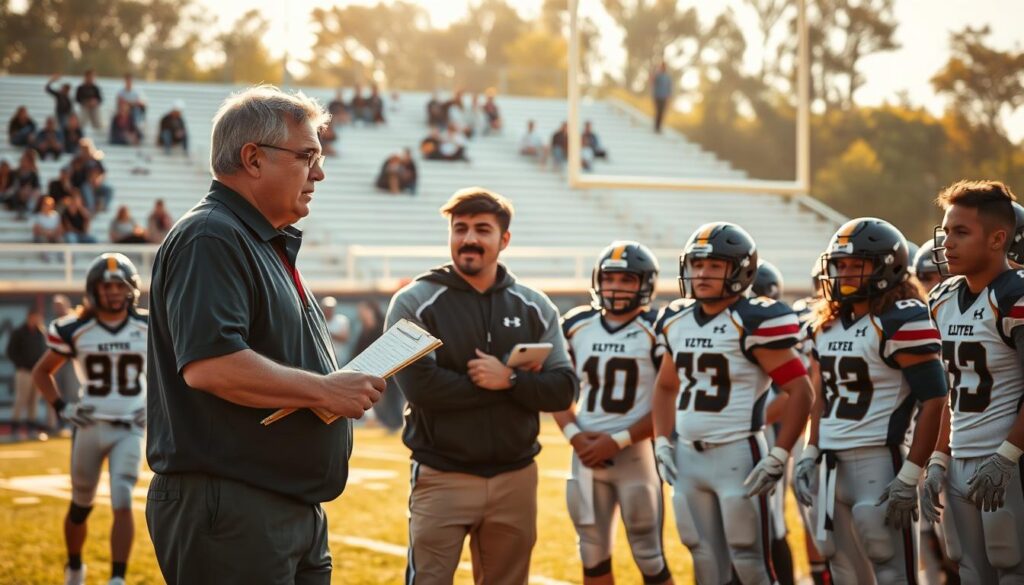
The difference is clear. It’s the gap between a polite “we’ll consider it” and a heartfelt “send him to you for the next level.” This endorsement comes from real relationship equity. It’s the kind of mentorship that shapes young athletes’ futures beyond the field.
Every coaching change, even planned ones like Norvell’s, forces a re-evaluation. These changes can strain local recruitment networks. The impact of coach turnover on team dynamics begins in living rooms and high school offices, before it affects the locker room.
In Florida’s competitive landscape, your best recruiter might not be the one with the best pitch. It could be your offensive line coach explaining a scheme over wings. It’s about building relationships in diners and on practice fields.
| Relationship Pillar | Old School Approach | New School Approach | Local Recruitment Impact |
|---|---|---|---|
| Communication | Seasonal check-ins, mostly around signing day | Year-round dialogue, scheme discussions, player development updates | Builds trust; coaches become advocates, not just informants |
| Transparency | “We want your player.” Period. | Honest assessment of fit, playing time projections, academic support | Reduces de-commitments; sets realistic expectations for all parties |
| Development Focus | Focus on the finished product (the star recruit) | Investment in the raw athlete; joint development plans | Access to under-the-radar talent; creates a “pipeline” mentality |
| Philosophy Alignment | Separate programs, separate goals | Shared football ideology; HS schemes that feed into college systems | Players arrive college-ready, accelerating their impact on the field |
So, when you see a headline about an assistant coaching change, look beyond the X’s and O’s. The real game is in those quiet talks with high school mentors. That’s where the map of local recruitment is truly drawn. Not with pushpins, but with meaningful handshakes.
Impact on Team Identity
What do you get when you build a team from local talent? It’s not just a team; it’s an identity. When Florida State faces off against Florida or Miami, it’s like a family reunion with a lot of intensity. The players on the field don’t just know the plays; they feel the culture deeply.
This is more important than ever. The change from Gus Malzahn’s run-heavy style to Mike Norvell’s balanced approach is huge. Its success depends on the team’s commitment and precise execution, often from local recruits who care deeply about the program’s history. This change is not just about the game plan; it’s about the team’s personality on the field.
The team’s fast and gritty identity is tested by a tough schedule. Does a team full of Florida kids handle the tough games against Louisville and Virginia the same way? Definitely not. Their local rivalries make them resilient. This helps the defense, led by Tony White, who can build a strong unit.
This local spirit goes beyond the game. A strong team identity, like consistent team branding, helps with discipline and a shared goal. The public sees a united team. Off the field, the culture is shaped by players who see every practice as a chance to represent their state.
Norvell’s focus on young talent, with seven first-year players expected to play, speeds up this change. When a freshman QB is the backup, it shows the team is building its future with local talent. The impact of in-state players is the team’s DNA. It’s the difference between playing for a logo and fighting for a home.