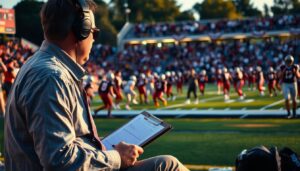
Forget the polished quotes. The real story is told in raw honesty after a loss. It’s the frantic calls when the transfer portal opens.
My take before the season? A step backwards. The truth? Historic levels of ineptitude. We’re diving into the gap between what’s expected and what happens.
Landen Thomas’s journey is a rollercoaster. He entered the portal, returned, and battled injuries. His comeback raises questions about the team’s culture.
We seek expert opinion from the front lines. Matt LaSerre and Nick Carlisle, known as the “War Path” duo, share their insights. They talk about inspiring leadership and the chaos of the portal.
The drama is also in the numbers. A single player’s choice can change a team’s chances by 28%. This is the high-stakes game behind the quotes.
So, let’s listen. To coaches selling a dream in the fire. To players torn between loyalty and the portal’s allure. This is the human side of a failed plan.
Behind the Scenes
The story of FSU’s decline is more than just a game plan. It’s about the daily struggles in the recruiting department. The football field was the stage, but the backstage was a disaster. Broken props, lost scripts, and a team that had given up.
From a recruiting insider’s perspective, the first sign of trouble was clear. Mike Norvell’s team had too many coaches focused on teaching, not recruiting. This made finding new players seem like a chore, not a priority. As a result, the team had players who didn’t put in the effort, losing valuable talent.
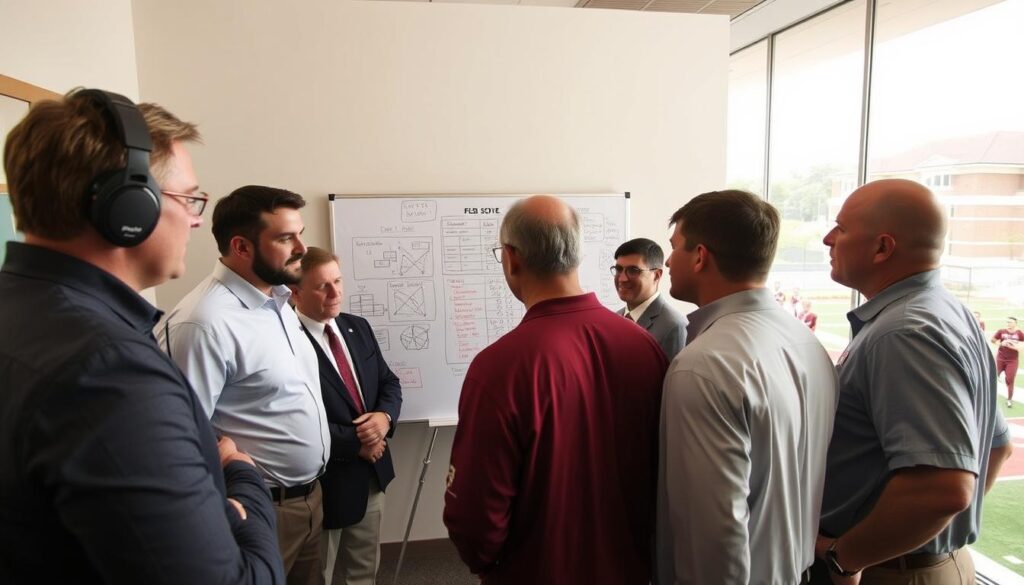
There was no accountability at FSU. Prospects interested in joining the team would often go weeks without hearing from their assigned coach. Imagine being a top high school player and being ignored by the school you thought cared about you. This was not a strategy; it was neglect.
The NIL era brought new challenges, but FSU was stuck in the past. A true recruiting insider would say that resources were wasted on creating a culture of entitlement, not excellence. Players were rewarded for past achievements, not for their current effort. This approach was bad for both the team’s morale and its future success.
Then, there was the attempt to bring in a new General Manager, Darrick Yray. It was like trying to run a barbecue joint with a sushi chef. The move didn’t work out. The team lacked the closers needed to secure top talent on signing day. The list of failures is long:
- No centralized tracking: It was unclear who was talking to whom and when.
- Reactive, not proactive: The team was always playing catch-up, not ahead of the game.
- Culture of ambiguity: With everyone responsible, no one was held accountable.
This wasn’t just a few bad hires; it was a deep-seated problem. The recruiting operation was a mess, leading to poor performance on the field. The lack of a strong, accountable recruiting team was the main reason for the decline. They were not just losing battles for top talent; they were not even showing up for the fight. That’s the ultimate recruiting insider failure.
Recruitment and Transfer Approach
Florida State’s college football roster building under Mike Norvell was like binge-eating in the transfer portal. At the same time, it was starving its high school recruiting kitchen. This strategy was not just a belief; it was a dependency. In 2024, this dependency broke, like a cheap chair.
The team believed that the next big portal win would fix all past developmental losses. But, this belief was wrong. The result was the grim prophecy that critics had warned about: you live by the portal, you die by the portal.
This over-reliance was not just a tactical mistake; it was a strategic surrender. While FSU chased quick fixes, it neglected its talent pipelines in states like Florida and Georgia. This left the program uniquely vulnerable.
Coaches like Mario Cristobal at Miami and Kirby Smart at Georgia used FSU’s portal-heavy reputation against it. They asked recruits, “Do you want to be developed, or do you want to be a temporary employee?” Many elite recruits chose the latter.
The transfer evaluation process was a comedy of errors. It was like buying a used car based on old photos. The staff often relied on old high school film, ignoring how players had developed or regressed elsewhere. Taking Alabama’s discards or a Power Five benchwarmer became a strange way to find talent.
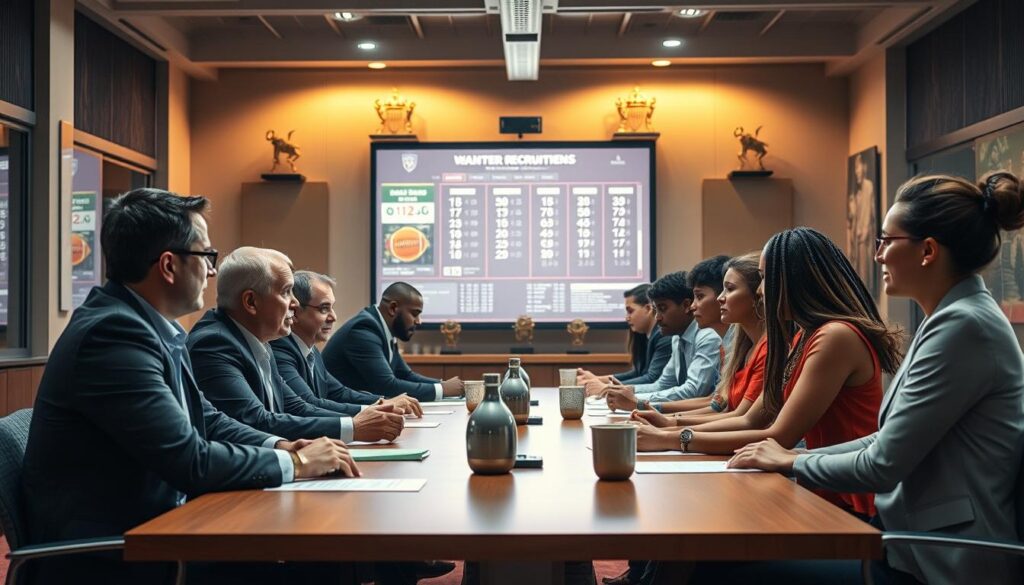
To fix this, a strategic autopsy is needed. It should be informed by interviews and internal perspectives. The goal is not to abandon the portal but to find balance. You can’t just Moneyball a culture with mercenaries. The new playbook must have three key chapters.
- Prioritize Developmental Talent: Rediscover the art of closing deals with high-school kids. Rebuild relationships in Florida and Georgia. This is about investing in clay you can mold, not a finished statue.
- Get Ruthless in Portal Evaluations: No more buying based on brand name alone. Evaluations must be current, thorough, and focus on fit and hunger, not faded glory.
- Smart NIL Allocation: Redirect collective resources. Allocate more towards young players you intend to build around. Structure deals with heavy performance incentives. Pay for future production, not past press clippings.
This shift requires a change in mindset, evident in every internal interview. It’s about valuing the grinder who wants to be a Seminole for four years over the tourist looking for a one-season showcase. The 2024 season was a $20 million lesson. The transfer portal is a tool, not a foundation. You can patch a roof with it, but you can’t build a house. Florida State’s future depends on remembering how to lay a foundation again, one honest interview and one committed high school handshake at a time.
Setting Expectations
The idea of an instant fix is a Netflix show that didn’t last. Florida State has big needs, like on the defensive line and at linebacker. Losing the Desir Twins was a big hit.
Keeping Kevin Wynn is a good start, but it’s just one piece. The rest of the team needs a lot of work.
Listening to recruiting experts is key. They say to focus on players from the Group of Five, not just big names. These big-name players often don’t work out.
So, what’s a realistic goal? Aim for 7-8 wins next year. Focus on young players and building a team that can compete in the fourth quarter. It’s not about making the playoffs. It’s about building a team you can be proud of by halftime.