In college football history, Florida State’s run from 1987 to 2000 stands out. For fourteen years, they were always in the Top 5 of the Associated Press rankings. This was more than just a streak. It was a time of unmatched excellence that changed what a team could do.
Bobby Bowden was the mastermind behind this success. His leadership made Tallahassee a place of confidence. From 1992 to 2000, his teams went 99-11-1. It was Florida State’s world, and everyone else was just catching up.
This era brought two national championships and twelve conference titles in fourteen years after joining the ACC in 1992. The numbers show their dominance. But the true impact was the culture. Bobby Bowden created a place where winning was the only option every Saturday.
This culture of confidence led to more than just wins. It made Florida State a national powerhouse. Every game was a big event. It set a high standard that shaped the program’s identity and its intense history of the rivalry for years to come.
Setting the Stage in the 1980s
In the early 1980s, Florida State University’s football team was independent and had small goals. Bobby Bowden changed everything when he came to Tallahassee. The team was seen as a small player in college football.
Bowden started by recruiting fast players from Florida. He also introduced a wide-open, aggressive offense. By the mid-1980s, the Seminoles were beating big teams, showing they were a force to be reckoned with.
The 1987 season was a turning point. Florida State went 11-1 and ranked #2 in the polls. This was the result of Bowden’s hard work. It marked the start of the legendary 1987‑2000 era.
In 1992, Florida State joined the Atlantic Coast Conference (ACC). This move ended their independent days and brought stability. The Seminoles quickly dominated, losing only two conference games in nine seasons. This period is well-documented for those interested in the Seminoles sidelines and their move to the ACC.
| Aspect | The Pre-Dynasty Era (Early 1980s) | The Launchpad Era (Late 1980s/Early 1990s) |
|---|---|---|
| Program Status | Midsize Independent | National Title Contender |
| National Perception | Regional Afterthought | Feared National Power |
| Key Achievement | Occasional Upset Win | Consistent Top-5 Finishes |
| Conference Affiliation | None (Independent) | Atlantic Coast Conference (ACC) |
The early years were not just a warm-up. They were the foundation. Being independent made the team tough and adaptable. Joining the ACC gave them a clear path to success. Every step in the 1980s, from Bowden’s arrival to the 1987 season, set the stage for the historic 14-year run that followed.
Recruiting Philosophy & Player Development
Florida State’s success came from a special plan. This plan was all about how they recruited and developed players.
Bobby Bowden had a unique way of recruiting. He didn’t just look at stats; he connected with families. His famous home visits were like chats with a favorite uncle. He promised a family vibe and a path to success.
Stars like Peter Warrick, Chris Weinke, and Warrick Dunn were drawn to this. They felt a real connection with Bowden. This connection made them choose FSU.
Walter Jones and Andre Wadsworth were also key recruits. It wasn’t just about one great class. It was about getting top talent every year. This built a team with incredible depth.
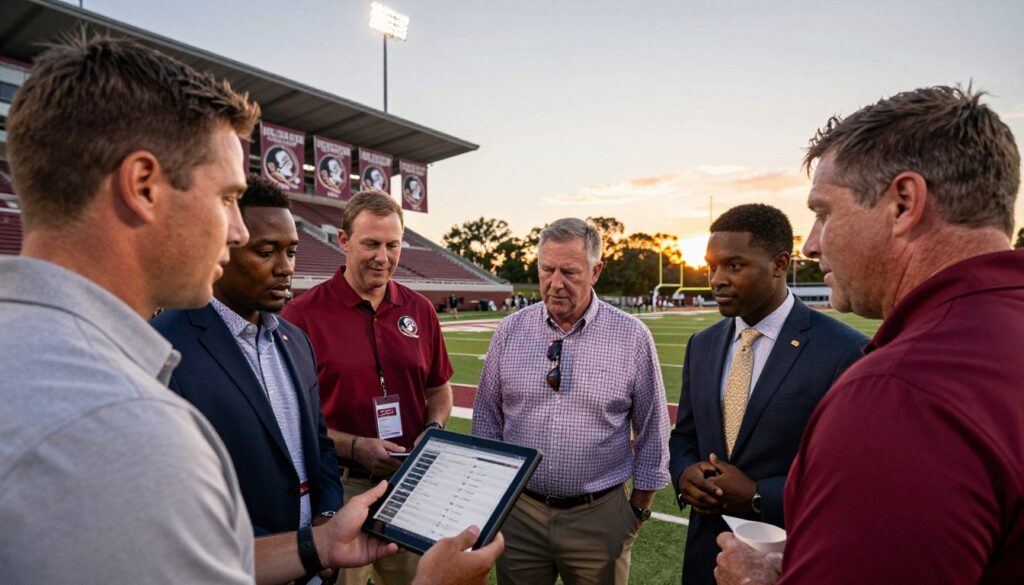
But recruiting was only half the battle. The Seminoles had a top-notch player development system. Coaches didn’t just pick athletes; they made them into complete football players.
The strength program was ahead of its time. Position coaches focused on the basics and football smarts. This turned raw talent into stars and NFL draft picks.
This created a cycle of success. Winning games made recruiting easier. Better recruits led to more wins and NFL stories. These stories were the best way to attract new talent.
The proof of this system is in the consistency records. For 14 years, FSU was among the top five. They won at least 10 games each year. The pipeline to the NFL never stopped.
These consistency records weren’t a fluke. They were the result of Bowden’s recruiting and development skills. This legacy shapes the modern FSU roster today.
Big Games that Cemented the Streak
The streak of fourteen consecutive top-five finishes was not just on paper. It was built on the field in huge games. These games defined an era of college football. Bobby Bowden’s Seminoles faced tough tests every season.
Games against Miami and Florida were key. These games often came down to one play or a last-second kick. Winning these games showed the nation the Seminoles’ toughness and readiness.
The 1993 season was a turning point. Florida State played No. 2 Nebraska in the Orange Bowl for the national title. They won 18-16, getting their first national title under Bobby Bowden.
That win proved a long-held philosophy. Bobby Bowden had reached the top, blending aggressive recruiting with relentless optimism.
Six years later, the dynasty reached perfection. The 1999 Seminoles went 11-0, facing Virginia Tech in the Sugar Bowl. Michael Vick led Virginia Tech, setting the stage for a legendary game.
The Sugar Bowl was unforgettable. Florida State’s defense held Vick back, while their offense was precise. They won 46-29, securing a second national title.
These games were the foundation of the streak. They turned consistent rankings into a lasting legend. Each win showed Florida State was built to win the biggest games.
Assistant Coaches and the Coaching Tree
Bobby Bowden worked like a CEO, trusting his team to run the show. He hired smart coordinators and let them shine. This team was key to Florida State’s success from 1987‑2000.
Mickey Andrews was the defensive mastermind. He coached for 26 years, focusing on aggressive play. His teams scared quarterbacks, thanks to his “attack-first” strategy.
Mark Richt was the offensive genius. He coached quarterbacks and helped create winning passing attacks. His patience and strategy turned raw talent into stars.
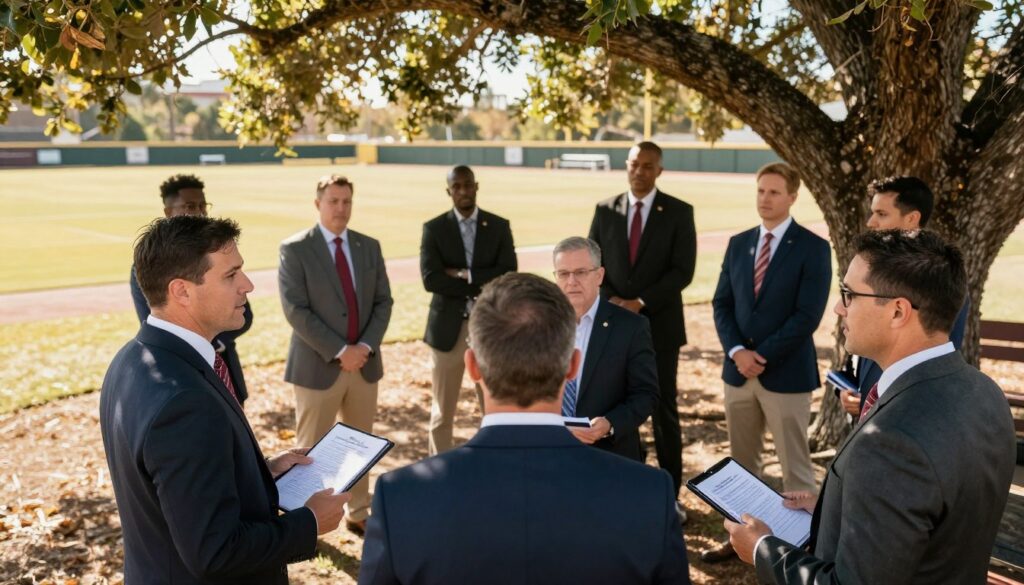
From 1987 to 2000, the staff’s stability helped players grow. Coaches like Richt and Andrews planned for the long term. This helped players like Charlie Ward and Chris Weinke reach their full potentials.
The “Bowden Coaching Tree” shows Bowden’s success in staffing. His assistants learned from him and went on to lead their own teams. This tree is a big part of college football history.
| Assistant Coach | Primary Role at FSU (1987‑2000 Era) | Notable Head Coaching Position After FSU |
|---|---|---|
| Mark Richt | Offensive Coordinator / QBs Coach | University of Georgia |
| Chuck Amato | Defensive Line Coach / Assistant HC | North Carolina State University |
| Brad Scott | Offensive Line Coach / Coordinator | University of South Carolina |
| Odell Haggins | Defensive Line Coach | Florida State (Interim HC) |
| Jimbo Fisher | Offensive Coordinator / QBs Coach (Late 2000s) | Florida State University, Texas A&M |
These coaches took the culture of accountability and competitive excellence to new places. Their success shows the strength of Bowden’s original team.
The 1987‑2000 dynasty was a team effort. Bowden was the face, but his assistants built the foundation. Their work and the coaching tree have left a lasting mark on college football.
How the Dynasty Changed ACC Football
When Florida State joined the Atlantic Coast Conference in 1992, it was more than just a new team. It brought a power that changed the league’s competitive scene for years. Before the Seminoles, ACC football was often overlooked nationally.
The conference was famous for its basketball stars. But football was not a top contender. The league’s fame and money came from basketball. Florida State’s arrival changed that quickly.
From the start, the Seminoles dominated college football. They won 12 of the next 14 ACC championships. They lost only two conference games, showing their unmatched dominance.
FSU’s success came from top-notch recruiting and performance. This raised the bar for all league teams. Schools had to improve their facilities, coaching, and recruiting to keep up.
The “Florida State effect” lifted everyone up. Games against the Seminoles became huge events. This competition made the league’s games better and more exciting.
The dynasty made the ACC a stronger football conference. It gave the league a top team that boosted its national image and TV value. This helped the conference grow and stay stable. Florida State didn’t just win games. It changed ACC football forever.
What the Streak Means to Modern FSU Fans
The 14-year streak of top-5 finishes is more than history for Florida State fans. It is the program’s defining legacy. This era set a high standard of excellence.
Fans remember a golden age of college football. In the 1990s, Florida State was the top team. Bobby Bowden’s teams were known for their explosive offense and tough defense.
This era’s success shapes today’s expectations. The streak’s legacy fuels a strong sense of nostalgia. Fans hope to see that level of success again.
The cultural blueprint from Bobby Bowden’s dynasty remains. It is a key part of the Florida State identity. The legacy of those 14 years continues to define what it means to be a Seminole fan. The pursuit of that golden age standard never truly ends.